When Health Data Becomes an Asset: What Readiness Actually Requires

Health data becomes an asset when it is made ready to use: harmonised to consistent standards, quality-assured, and rigorously protected. Until then, it is only stored, and stored data is a cost rather than an asset.
Key takeaways
- Storing data is not the same as making it usable. Readiness, not volume, is what creates value.
- Ready health data pays back twice: a whole-patient view inside the organisation, and a scarce, sought-after asset outside it.
- Readiness requires four disciplines applied continuously: harmonisation to consistent medical coding standards, quality assurance, de-identification and pseudonymisation, and coverage of incoming as well as historical data.
- The privacy bar is the enabler, not the obstacle. Only properly protected data can be responsibly shared.
In my conversations with health leaders across Asia-Pacific, the same pattern comes up again and again. Data is treated as something to be stored, protected and, eventually, tidied up. It sits in the budget as a cost and in the operational plan as a project that never quite finishes. That framing is understandable, and it quietly undersells what the data actually is. Handled properly, the clinical data an institution already holds is one of its most valuable and most underused assets. The difference between a cost and an asset is not the data itself. It is readiness.
What makes health data an asset rather than a cost?
An asset is something that produces value more than once, and clinical data can do exactly that in two directions at the same time. Inside the organisation, well-structured data gives clinicians a complete view of a patient rather than scattered fragments, and it gives any AI ambition a foundation it can actually stand on. Outside the organisation, high-quality, privacy-protected health data has become a genuinely scarce resource. Research organisations, life sciences companies and developers of new clinical tools all need it, and they increasingly struggle to find data that is diverse, longitudinal and trustworthy. Data from Asia-Pacific, in particular, is among the most underrepresented in the evidence base that modern medicine is built on, which makes it valuable precisely where it is currently hardest to find.
None of this means selling patient records. It means recognising that a properly governed, de-identified and harmonised dataset can support research, strengthen the systems that created it, and open a new revenue stream for institutions under real financial pressure, all without compromising the people behind the data.
Why is a data lake not enough?
A data lake is not enough because storage is not readiness. Raw data, however much of it there is, cannot do the work. Records accumulate across systems that were never designed to talk to one another. The same test, diagnosis or medication is recorded in different formats, under different names, in different languages, and often to different local conventions. A result captured in one facility cannot be reliably compared with the same result captured in another. Moving all of this into a single data lake does not fix it. A lake full of unharmonised data is simply a larger version of the same problem, and it returns very little, either clinically or commercially, until the underlying data is made consistent. I have written more about why making a record usable is a different task from simply reading it.
What does it mean for health data to be ready?
Readiness is not a single step. It is a small number of disciplines applied together, and applied continuously.
Harmonisation to consistent standards: Data has to be mapped to consistent medical coding standards so that a value means the same thing every time it appears, regardless of which system, language or year it came from. This is what turns a pile of records into information that can be trended, compared and trusted.
Quality assurance: Harmonisation without verification is only a hopeful guess. Independent quality checks confirm that the mapping is correct and that the data behaves as expected across the full set, not only on a convenient sample.
De-identification and pseudonymisation: Before data can be shared or used beyond direct care, it has to be de-identified and pseudonymised so that no individual can reasonably be re-identified. This is the discipline that makes every other possibility legitimate. I explain it in more depth in a companion piece on the difference between de-identification, pseudonymisation and anonymisation.
Continuous coverage of incoming and historical data. Readiness that only addresses the historical archive is temporary, because new data arrives every day in the same fragmented state. Treating readiness as a continuous capability, applied to incoming data as well as the backlog, is what stops the problem from quietly rebuilding itself.
Can health data be an asset without compromising privacy?
Yes, and in fact privacy is what makes the value possible. It is tempting to see privacy requirements as the thing standing between an institution and the value in its data. In practice, the opposite is true. An institution that can demonstrate disciplined de-identification, pseudonymisation and quality assurance has something it can safely put to work. An institution that cannot has nothing it can responsibly share, and should not try. Meeting the privacy bar is not the price of entry. It is the asset.
How can leaders tell if their data is ready?
Leaders do not need a full audit to know roughly where they stand. A few honest questions get most of the way there.
- Can a given clinical value be compared reliably across your different systems and sites today, or does it mean different things in different places?
- If a researcher asked for a de-identified, standardised extract next month, could you produce one with confidence in both its quality and its privacy protection?
- Does your approach cover the data arriving today, or only the archive you have already worked through?
- Can you show, rather than assert, how individuals are protected in any data you would share?
If the answers are uncertain, that is not a failing. It is simply the gap between storage and readiness, and it is a gap that can be closed deliberately.
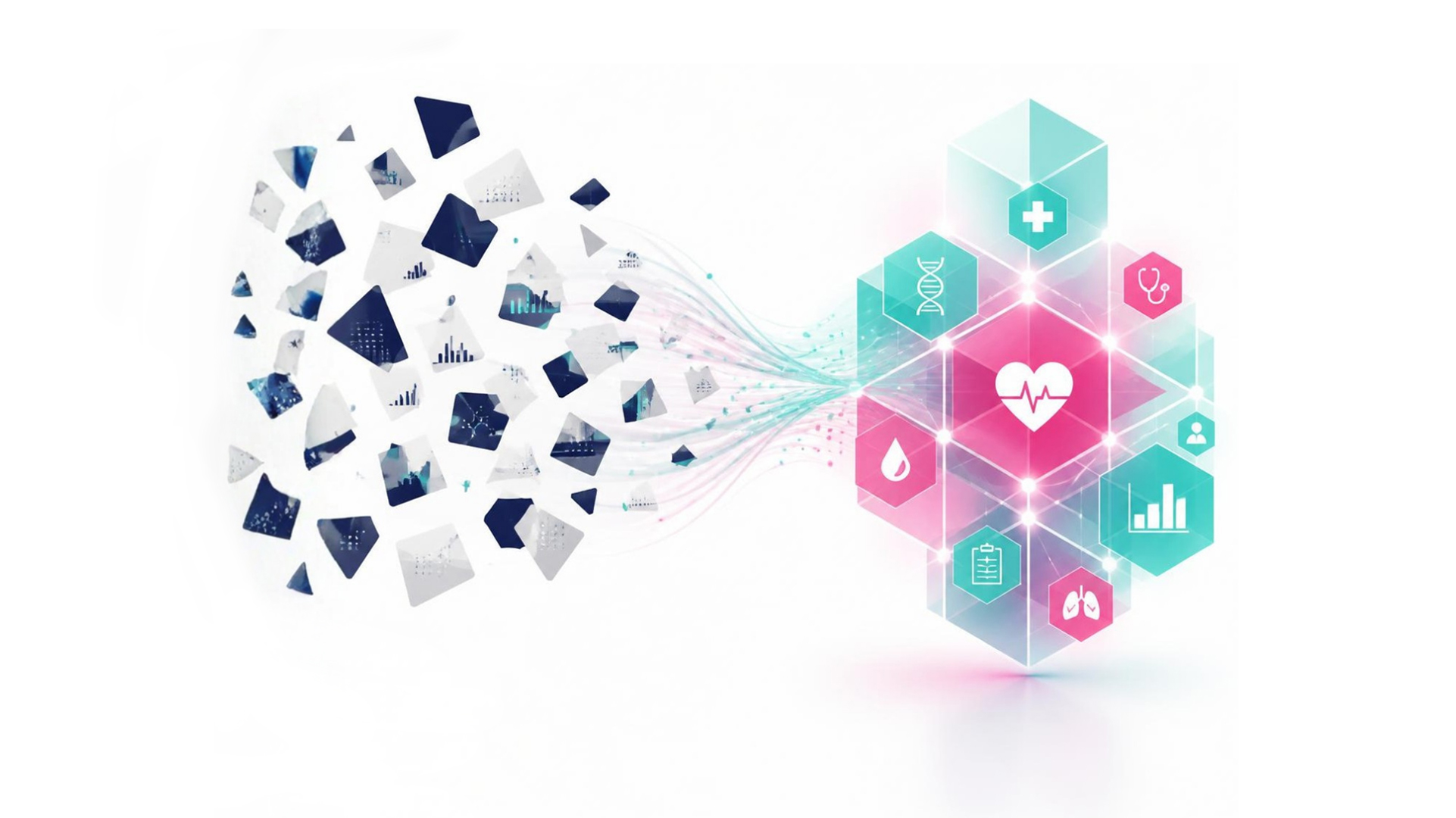
From chaos to clarity
The health systems that will look prescient in a few years are not necessarily the ones with the most ambitious AI programmes. They are the ones that treated data readiness as a capability rather than a chore, met the privacy bar with discipline, and in doing so turned data chaos into data clarity. Their reward is optionality: a clearer view of their patients, a foundation their AI plans can rely on, and an asset the rest of the market did not realise they were sitting on.
At Jonda Health, we help healthcare organisations reach that point, harmonising and protecting health data across incoming and historical records so it becomes health data you can build on. To see how, explore our resources.
Common questions
What is health data readiness?
Health data readiness is the state in which clinical data has been harmonised to consistent medical coding standards, quality-assured, and de-identified or pseudonymised so that it can be trusted, compared and used, both for care and analytics inside the organisation and for responsible sharing outside it. Readiness is about consistency and protection, not the sheer volume of data an organisation holds.
Can hospitals monetise their health data legally and ethically?
Hospitals can create value from their data ethically without selling patient records. When data is de-identified, pseudonymised and harmonised to a high standard, it can be shared with researchers, life sciences companies and developers of clinical tools in a governed way, creating a new revenue stream while protecting the individuals behind the data. The legal and ethical basis depends on rigorous de-identification and compliance with frameworks such as HIPAA, GDPR and PDPA.
Why is Asia-Pacific health data particularly valuable?
Asia-Pacific populations are among the most underrepresented in the datasets that modern medical research relies on. Analyses of genome-wide association studies have found that people of Asian ancestry made up only around a fifth of participants, while Asia is home to roughly 60 percent of the world's population. That scarcity makes diverse, longitudinal, well-harmonised data from the region especially sought after.
Is a data lake the same as data readiness?
No. A data lake is a place to store data. Readiness is about whether that data is consistent, verified and protected enough to use. A data lake full of unharmonised records is simply a larger version of the same fragmentation problem, and it returns little value until the underlying data is harmonised and quality-assured.
Related reading: Reading a Lab Report with AI Is Not the Same as Making It Usable · The Hidden Engineering Tax of Using Document AI in Healthcare · AI in Healthcare: What 2025 Revealed and What to Watch in 2026
Suhina Singh is the founder and CEO of Jonda Health, a Singapore-based health data infrastructure company. A physician by training, she works with health systems across Asia-Pacific to harmonise, de-identify and standardise clinical data so it can be trusted and used. Jonda Health is ISO 27001 certified.