Which Healthcare Workflows to Automate First: A Scoring Guide

Most healthcare teams do not struggle to find workflows that could be automated. They struggle to choose which one to do first. This guide gives you a simple way to score any workflow on three things: the value of automating it, the risk if the automation gets it wrong, and whether the data it depends on is ready.
It is written for three kinds of reader: hospital and clinic operations leaders, laboratories and diagnostic networks, and medical and digital leads in pharma affiliates. Each has a section of worked examples. The guide covers four kinds of automation: data entry and document handling, reporting and analytics preparation, patient communication and support, and work assisted by AI agents and large language models.
The guide is tool neutral and vendor neutral. At the end we explain where Jonda Health Services can help, and where you are unlikely to need us.
Why the first choice matters
The first workflow you automate does more than save time. It decides whether colleagues trust the next project, whether the budget holder funds it, and whether the person who sponsored it has something to show. A first project that pays back quietly earns permission for the second.
First projects tend to be chosen in one of two ways. Some teams pick the workflow that generates the loudest complaints. Others pick the one that looked most impressive in a vendor demonstration. Both are understandable, and both leave out the same two questions: what happens when the automation is wrong, and can a machine actually work with the inputs this workflow receives?
Those questions matter because automation does not improve a process. It runs the process faster and more consistently, including its errors. A person who makes a mistake makes it once, and usually notices something odd. An automated step can repeat the same mistake hundreds of times before anyone looks. That is the quiet risk this guide helps you see in advance.
The three lenses
Every candidate workflow is looked at through three lenses, and each lens produces a score from 1 to 5.
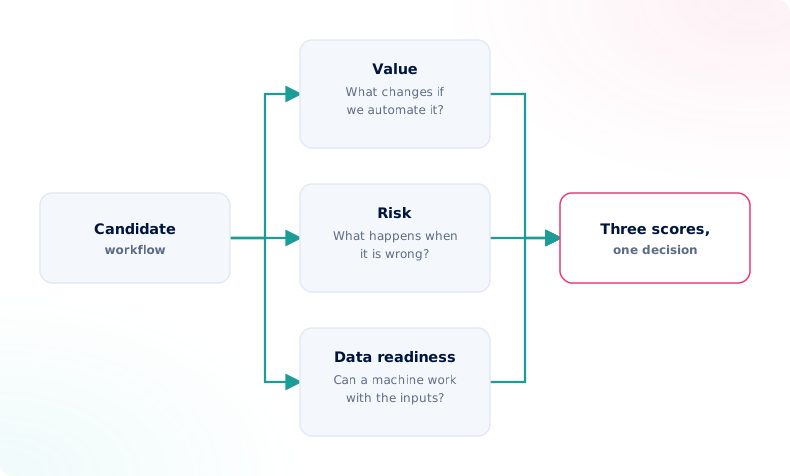
The three scores are kept separate on purpose. Adding them into one number hides the most useful information, which is the pattern: a high-value workflow with unready data calls for a different first step from a high-value workflow with high risk.
How to score a workflow
Each lens has four questions. Score every question from 1 to 5, then take the average for the lens. For value and data readiness, a high score is good news. For risk, a high score means more care is needed.
Score as a small group, and include three perspectives: someone who does the work today, someone responsible for clinical quality or compliance, and someone from IT or data. People who do the work tend to score data readiness lower than their managers do, and they are usually right. A small group can work through ten workflows in a single session.
It is also worth recording a baseline for each workflow you score: how many items, how long they take and how often they go wrong today. Without a before, there is no way to show the after.
Reading the scores
The three averages lead to one of four outcomes. As a working rule, treat an average of 3.5 or above as high.
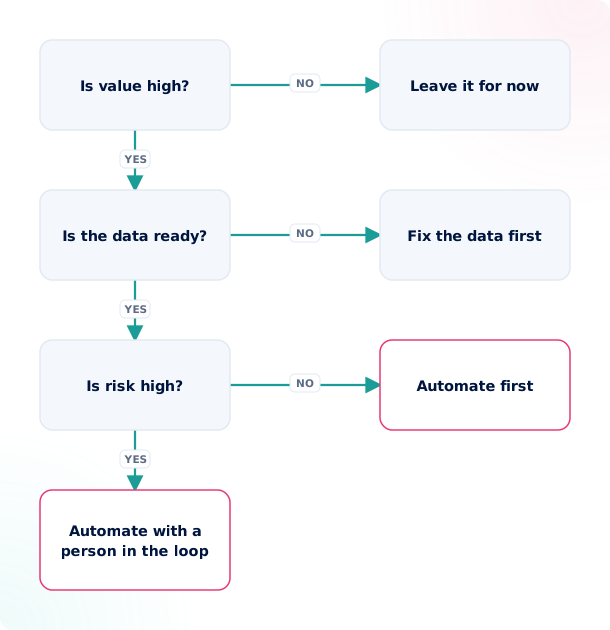
The order of the questions matters. Data readiness is asked before risk, because unready data makes every other judgement unreliable, including your estimate of the risk.
"Fix the data first" deserves attention, because it is the outcome that a demonstration will never show you. If several of your workflows land there, look for the data problem they share. Fixing it once usually moves more than one workflow into the "automate" column.
The threshold of 3.5 is a starting point. A patient-facing service may reasonably set a lower bar for what counts as high risk.
Four kinds of automation, and how they tend to score
Most candidate workflows fall into one of four kinds. Each has a typical scoring pattern, which helps you know where to look hardest.
Data entry and document handling. Reading the characters on a page is largely a solved problem. Understanding what they mean is not. A laboratory result, a referral letter or a prescription carries clinical meaning in the relationships between its parts, so test any tool on your own documents, including the difficult ones.
Reporting and analytics preparation. A wrong number in a dashboard looks exactly like a right one. If two sources define the same measure differently, automating the report will publish the disagreement faster. Agree the definitions before you automate the assembly.
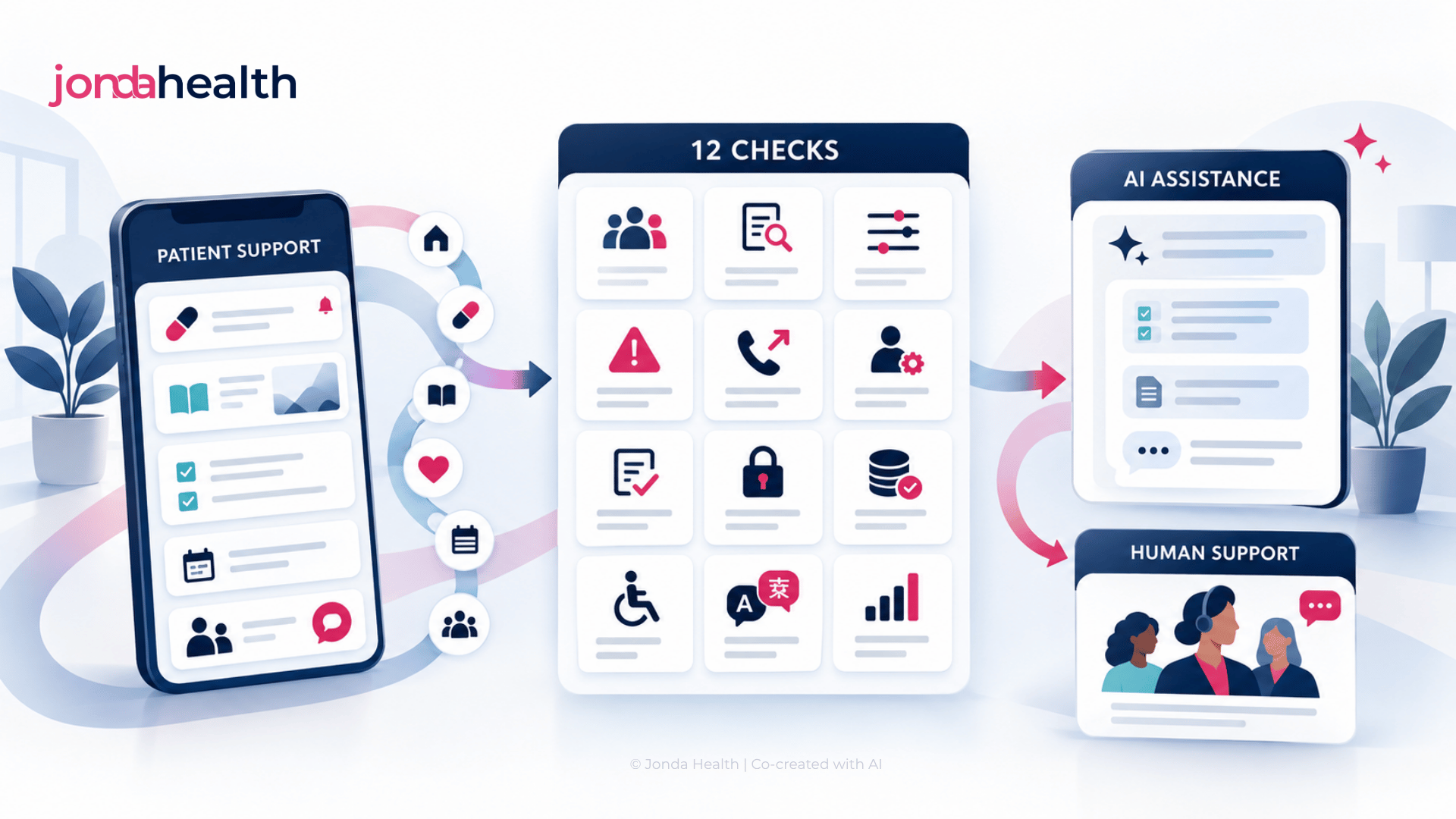
Patient communication and support. Begin by writing down what the automation must never do, such as giving clinical advice or handling a report of a side effect on its own. Then design the route by which a conversation reaches a person. Reminders and logistics usually score well. Anything that touches symptoms or treatment needs a person in the loop.
AI agents and LLM-assisted work. Large language models are tolerant of messy input, and that tolerance can hide a data problem without solving it. The output reads fluently whether or not the underlying data was understood correctly. Three further points are worth checking: whether patient data reaches a model provider under an agreement that permits it, who checks the output, and what the running cost will be at real volumes. Teams that build this in-house are often surprised by the cost of tokens once a pilot becomes a daily workload.
For hospitals and clinics
The scores below are illustrative. They show how the framework behaves, and your own scores will differ with your systems, your patients and your market.
Appointment reminders are the classic first project. The data sits in one scheduling system, a mistake is visible quickly, and the saving is easy to measure.
Outside results and referral letters are the workflow most hospitals would love to automate, and the one where data readiness is lowest. The documents arrive as PDFs, scans and photographs from many senders, each with its own layout, test names and units. The value is real, and the first step is to get those inputs into a consistent, structured form. Once that is done, the same workflow scores as "automate with a person in the loop".
Discharge summaries score well on data readiness because the notes are already in the record. They still need a clinician to approve every summary, because the consequence of an error is high and a fluent summary is hard to doubt.
For laboratories and diagnostic networks
Laboratories often start ahead of other healthcare organisations, because the laboratory information system already holds structured data. The scores below are illustrative.
Delivering structured results to partners is where many laboratories see the largest commercial value, because partners increasingly ask for data they can use and not only a PDF. Inside one laboratory the data is structured. Across sites and partners it is not yet consistent: local test codes, unit conventions and reference ranges differ, and some institutions maintain their own code sets. Harmonising those is the data work that comes first.
Handwritten request forms score 1 on data readiness. The better first step is often to change the input, for example by offering electronic ordering to your highest-volume referrers, and to automate the reading of whatever paper remains.
For pharma affiliates
Medical and digital leads in an affiliate are often asked to find an AI or automation use case that shows value for the business within the year. The framework helps you choose one that will hold up when compliance, medical and IT colleagues look at it closely. The scores below are illustrative.
Insights reporting and literature monitoring make good first projects. The inputs are already digital, nothing reaches a patient, and the time released belongs to medically qualified people. A sample of outputs should still be checked each cycle.
Patient support programmes are where the appetite for AI is strongest and where the scores ask for the most care. Enrolment documents arrive as photographs and scans, in local languages, from many hospitals and laboratories. Messages from patients and carers are free text across several channels. Both need work on the inputs before automation can be trusted. Safety reporting remains a regulated activity with a named accountable person, so a person stays in the loop even when the data is ready.
Common mistakes when choosing what to automate
- Choosing by demonstration. A demonstration shows the value lens on clean data. Ask to see the tool working on your own inputs, including the worst of them.
- Automating a process nobody has reviewed in years. Some steps exist only because of a constraint that has since gone. Simplify first, then automate what remains.
- Reading an LLM's tolerance as data readiness. A model that produces fluent output from messy input has not made the input reliable. Check the output against the source for a meaningful sample.
- Scoring risk on likelihood alone. An unlikely error that nobody would notice for weeks can matter more than a frequent error that is caught the same day.
- Scoring without the people who do the work. They know where the inputs are poor, which exceptions occur and which workarounds keep the process running.
- Starting without a baseline. If you have not measured the workflow before automation, you cannot show what changed afterwards, to your organisation or to yourself.
- Treating the human check as temporary by default. Reduce checking when the evidence supports it, and keep it where the consequence of an error is high.
Where Jonda Health Services fits
Jonda Health Services helps healthcare teams decide which workflows to automate first, and supports them from that decision through to delivery. Automation and digital enablement is one of the areas we cover, alongside digital health strategy, experience design, health data foundations and data sourcing.
You are unlikely to need us for the workflows that land in "automate first". If the data is ready and the risk is lower, your own IT team or the tools built into your existing systems will usually serve you well.
We tend to be most useful in three situations.
- You have a long list and no agreed way to choose. We can run the scoring with your operational, clinical and IT colleagues, and bring experience from clinical practice, pharma, product and health data to the conversation.
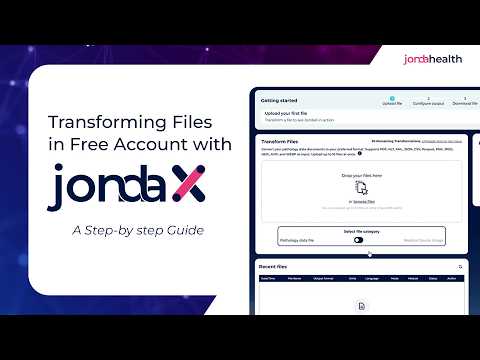
- Your most valuable workflows land in "fix the data first". This is the heart of our work. A Health Data Foundations assessment takes about four weeks and tells you what is wrong with the inputs, what can be fixed at source and what it would take to make the data usable. Where the data then needs transforming, JondaX is our health data transformation engine. It makes records usable across formats and languages, cleans them, resolves the different ways the same thing has been captured, applies clinical review and quality checks, and maps the result to medical coding standards or to your own code set.
- You are using AI on patient data and want to be sure the approach holds up. We help teams look at where data travels, what checks are in place and what the running cost will be at real volumes.
Jonda Health is ISO 27001 certified, and JondaX is designed to comply with HIPAA, GDPR and PDPA.
Much of what is in this guide comes from our own experience, including the things we underestimated when we built our own products. You do not need to have everything worked out before you reach out. If you would like to talk through your list of workflows, get in touch at hello@jonda.health.
Frequently asked questions
Which healthcare workflows should be automated first?
Start with workflows that combine high value, inputs a machine can already work with, and a lower consequence of error. Appointment reminders, internal reporting from a single system and literature monitoring are common examples. Workflows with high value and unready data come second, after the data has been fixed.
Do we need AI to automate healthcare workflows?
Not always. Many good first projects use rules, templates and integrations between existing systems. AI earns its place where the inputs are unstructured, such as documents, images and free text, and it brings additional questions about where data travels and who checks the output.
What does "data readiness" mean for automation?
It means the inputs to a workflow arrive in a form, consistency and quality that a machine can use, and that you have permission and the means to access them. Structured fields from one system score high. Scans, handwriting, local codes and several languages score low.
What if most of our workflows score "fix the data first"?
That is a finding, and a useful one. It usually points to a small number of shared data problems. Fixing those once tends to unlock several workflows together, which is a stronger business case than any single automation.
Is it safe to use ChatGPT or a similar tool on patient data?
It depends on where the data travels, which agreements cover it and who checks the output. Score it on the risk lens like any other workflow, and pay particular attention to question 7.
Does Jonda Health help with healthcare workflow automation?
Yes. Jonda Health Services helps hospitals, laboratories and pharma teams choose which workflows to automate first, fix the data those workflows depend on, and move from plan to delivery. You can reach the team at hello@jonda.health.
Suhina Singh is the founder and CEO of Jonda Health, a Singapore-based health data infrastructure company. A physician by training, she works with health systems across Asia-Pacific to harmonise, de-identify and standardise clinical data so it can be trusted and used. Jonda Health is ISO 27001 certified.